

Air Jordan Retro Best Price Most Popular
Jordan 1 Sneakers Colorways That Transformed the Sneaker World Forever
More than just a athletic shoe, the Air Jordan 1 is the canvas on which contemporary sneaker culture was painted. Since Peter Moore’s first creation appeared in 1985, the Jordan 1 model has been produced in upwards of 700 cataloged colorways, and yet only a handful have achieved the kind of cultural impact that redefines whole industries. These are the colorways that ignited chaos at drop events, drove millions in resale value, inspired fashion designers, and became icons of individuality for whole generations. Each colorway listed here didn’t just push units — it shifted the paradigm on what shoes could symbolize in broader culture. In 2026, the Air Jordan 1 remains the most iconic sneaker silhouette on the planet, and the colorways below show clearly why that dominance has endured for over four decades. This is the ultimate examination at the Jordan 1 colorways that reshaped everything.
Chicago (1985): The One That Started It All
There is no conversation about sneaker culture that doesn’t begin with the Air Jordan 1 “Chicago” — the white, black, and varsity red colorway that Michael Jordan rocked during his debut season with the Bulls in 1985. This was the pair that Nike risked its basketball ambitions on, committing a then-unprecedented $2.5 million endorsement contract in a rookie who hadn’t yet played a single pro game. The color layout was deliberately bold, crafted to match the Chicago Bulls’ home jersey and be visible on television broadcasts that were still largely experienced on smaller screens. In its first year, the Chicago colorway drove $126 million in sales, a number that surpassed Nike’s most ambitious estimates by a factor of forty. In 2026, an OG 1985 pair in unworn condition can reach prices between $15,000 and $40,000 depending on size and documentation, making it one of the most valuable consumer-grade products in history. Every retro re-release of the Chicago — in 1994, 2013, 2015, and the “Lost and Found” edition in 2022 — has been snapped up within minutes, confirming that this colorway’s gravitational pull has not diminished one bit across four decades.
Bred / Banned (1985): How Controversy Fueled a Legend
Known popularly as “Bred” or “Banned,” the black and red Air Jordan 1 occupies a singular place as the sneaker that turned a uniform violation into the most powerful advertising jordan shoes story in sneaker history. The NBA penalized Michael Jordan $5,000 per game for wearing kicks that violated the league’s mandated 51% white rule, and Nike gladly paid every fine while creating ads that embraced the scandal. The “Banned” narrative transformed a basic pair of shoes into a symbol of defiance, individuality, and the notion that boundaries are made to be pushed by the most talented. This tale struck a chord deeply with young consumers in the mid-1980s and has been retold so many times that it’s now embedded in American popular mythology. The Bred colorway has been reissued more than any other Jordan 1, with key drops in 2001, 2009, 2013, 2016, and 2025, each generating massive sell-outs. Resale data from StockX indicates that the Bred Jordan 1 always appears in the top five most-traded sneakers on the marketplace year after year, confirming a appetite that simply does not fade.
Royal Blue (1985): The Hip-Hop Icon
While the Chicago and Bred get the headlines, the Royal Blue Air Jordan 1 subtly turned into the go-to shoe for New York City’s burgeoning hip-hop movement in the late 1980s. The eye-catching black and royal blue color scheme went perfectly with the Kangol hats, gold chains, and denim that represented foundational hip-hop style, and the sneaker appeared in innumerable clips, album art, and concert stages throughout the decade. Performers from Run-DMC’s circle to subsequent waves of New York rappers claimed the Royal as a closet essential, weaving it into the visual language of hip-hop for decades. The 2017 retro release created over $30 million in secondary-market sales alone, and the 2024 “Royal Reimagined” edition offered premium materials that attracted both longtime enthusiasts and a fresh wave of consumers. What makes the Royal significant beyond looks is its part in uniting court culture and music culture — it proved that a kick could belong equally to an player and an musician. The Royal’s persistent popularity in 2026 proves that colorways rooted in genuine grassroots culture have a durability that ad spend alone cannot manufacture.
Shadow (1985): The Understated Icon
Not every culture-changing colorway needs to shout — the Air Jordan 1 “Shadow” in black and medium grey proved that minimalism could be as compelling as eye-catching color combinations. Dropped as part of the original 1985 roster, the Shadow was at first seen as a supporting colorway compared to the Chicago and Bred, but it has aged into one of the most coveted and adaptable colorways in the complete Jordan range. The understated colors makes it one of the few Jordan 1s that can be worn with virtually any look, from formal attire to relaxed looks, which gives it a real-world daily-wear appeal that louder colorways may not offer. Style influencers and stylists consistently cite the Shadow as the “ideal first Jordan 1” because of its talent for pairing with rather than compete with the rest of an outfit. The 2018 retro reissue flew off shelves immediately and commanded $280 on the aftermarket, while the 2023 “Shadow 2.0” brought a reverse color blocking that polarized fans but still sold out within hours. The Shadow’s path from overlooked original to essential grail is a textbook example of how sneaker culture’s preferences evolves over time, often promoting the subdued over the loud.
| Colorway | First Release | Key Retro Years | Approx. Resale (DS, 2026) | Cultural-Impact Significance |
|---|---|---|---|---|
| Chicago | 1985 | 1994, 2013, 2015, 2022 | $300–$40,000+ | Where sneaker culture began |
| Bred / Banned | 1985 | 2001, 2013, 2016, 2025 | $250–$15,000+ | Rebellion and marketing legend |
| Royal Blue | 1985 | 2001, 2017, 2024 | $200–$8,000+ | Music-meets-court icon |
| Shadow | 1985 | 2009, 2018, 2023 | $180–$5,000+ | Understated elegance |
| Travis Scott Reverse Mocha | 2022 | — | $1,200–$2,500 | Star-powered collabs |
| Off-White “The Ten” Chicago | 2017 | — | $4,000–$12,000 | High fashion meets streetwear |
| UNC (University Blue) | 1985 | 2015, 2021 | $200–$6,000+ | MJ’s UNC heritage |
Collaborative Releases: Travis Scott and Off-White Redefine the Game
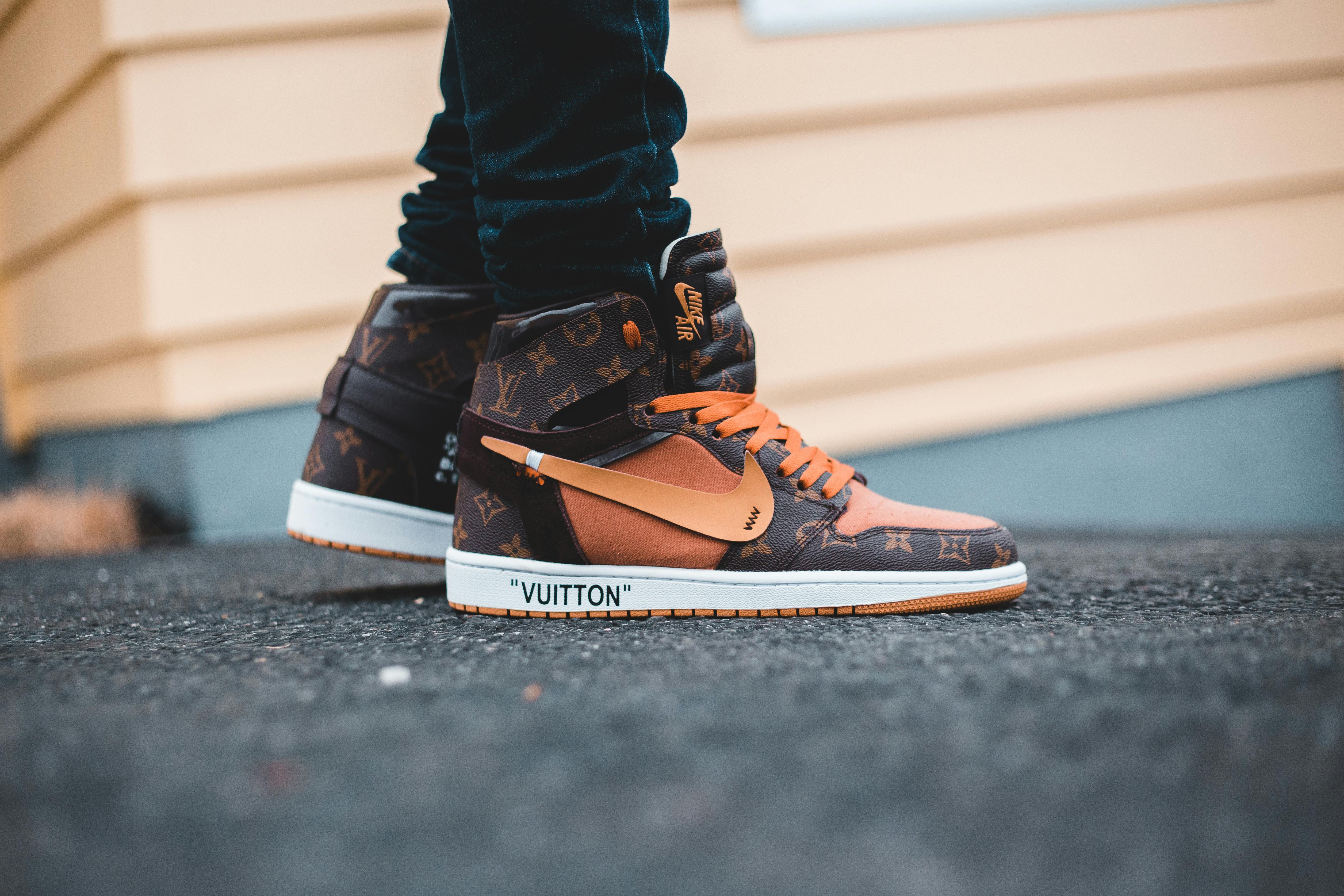
From 2017, co-created colorways on the Jordan 1 fundamentally changed how the sneaker world handles drops and cultural impact. Virgil Abloh’s Off-White x Air Jordan 1 “Chicago,” part of “The Ten” collection, reimagined the iconic silhouette with exposed foam, shifted swooshes, and factory zip-tie tags unlike anything seen before. That pair — selling for $190 and now reselling for $4,000 to $12,000 — cemented kicks as conceptual art and style statements simultaneously. Travis Scott’s partnership, most notably the 2019 high-top and the 2022 “Reverse Mocha” low, unveiled the reversed swoosh that inspired numerous knockoffs across the footwear industry. These collaborations birthed a new level: the “hype collab” release, where the collaborator’s name holds the same influence to Jordan Brand itself. In 2026, collaborative Jordan 1 drops sell out in under 90 seconds on the SNKRS app and drive more engagement than many major fashion house releases.
University Blue and the Emotional Weight of Legacy Colorways
Because it honors Michael Jordan’s alma mater, the University of North Carolina at Chapel Hill — where he hit the championship-clinching basket in the 1982 NCAA Championship as a freshman — the Air Jordan 1 “UNC” or “University Blue” colorway carries intensely meaningful meaning. That moment ignited Jordan’s journey, and the light blue and white combination forever bonded this colorway to basketball’s most compelling origin narrative. Every UNC drop taps into that deep well of emotion, tying buyers to a tale of purpose and championship-level play. The 2015 retro was one of the most hyped drops of the decade, and the 2021 “Hyper Royal” variation extended the spectrum with a tie-dye treatment demonstrating classic colorways could develop without losing deeper meaning. Sneaker culture thrives on storytelling, and no colorway carries a more moving story than the one tied to Jordan’s iconic beginning. The UNC’s ongoing appeal in 2026 validates that true narratives always trumps marketing-driven hype.
Why Colorways Matter More Than Ever in 2026
Ultimately, the Air Jordan 1’s lasting dominance comes down to a fundamental fact: the shape acts as a clean slate, and colorways are the art that gives it meaning. In an era where Nike releases hundreds of Jordan 1 iterations each year, the colorways that resonate hold history — the rebellious origin of the Bred, the musical credibility of the Royal, the design innovation of Off-White. Social media platforms like Instagram and TikTok amplify each launch into a global event generating millions of engagements within hours. The resale market, worth over $10 billion globally, functions as a exchange for colorways, with prices moving based on cultural sentiment and supply constraints. For the next generation exploring Jordan Brand in 2026, these colorways provide entry points into a deep history spanning sports, music, fashion, and identity. The Jordan 1 showed that the right shades on the right silhouette become a permanent cultural fixture.
